Pizza Perks, Real Paychecks: What 'Free Food' Actually Costs You on an Hourly Shift
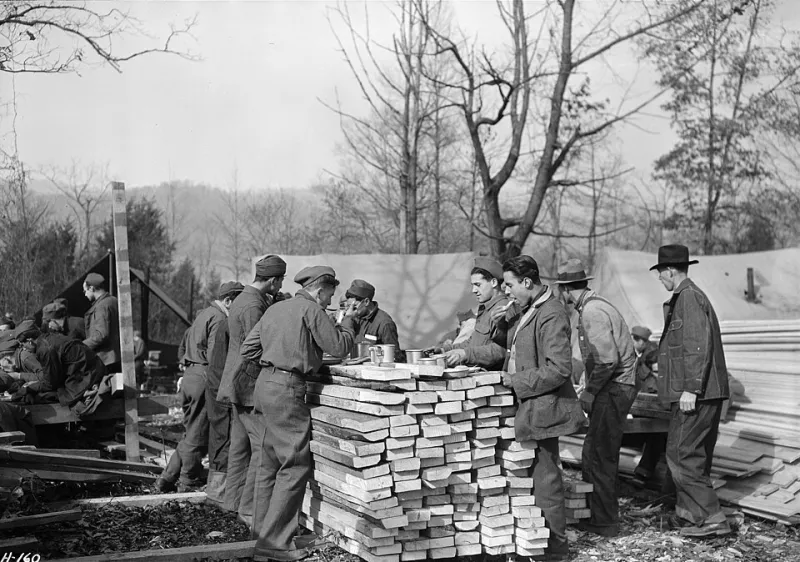
Photo: Lewis Hine, Public domain, via Wikimedia Commons
Every job posting has one. Tucked between the hourly rate and the 'fun team environment' line, there it is: free meals or 50% employee discount. And honestly? When you're a student surviving on instant ramen, that perk can feel like it's worth a dollar an hour all by itself.
Sometimes it is. Often it isn't. Here's how to figure out which one you're looking at before you sign anything.
The Three Flavors of Shift Food (Only One Is Actually Free)
Not all meal perks are created equal. In the US hourly world, you'll usually run into one of three setups:
1. The on-clock meal. You eat during working time, and the food is genuinely on the house. Rare, valuable, and basically the gold standard. Some high-end restaurants and hotel kitchens do this because they want their staff fed and sharp.
2. The break-window meal. You get a discounted or free meal, but only during an unpaid 30-minute break—if you get one at all. In states like Texas or Florida, where employers aren't legally required to provide breaks, this 'perk' might mean scarfing a discounted burrito in your car.
3. The discount-code meal. 50% off, only when you're not working, sometimes capped at a dollar amount per shift. This is the most common—and the easiest to overvalue. Fifty percent off a $16 fast-casual bowl is $8. If the job pays $2 an hour less than the place down the street, you'd need to eat there twice a day just to break even.
Doing the Math on a $2 'Perk'
Let's say two coffee shops are hiring. Shop A pays $17 an hour with no food perk. Shop B pays $15.50 an hour and gives you a free shift drink and half-off food.
If you work 20 hours a week and actually use the perk every shift, Shop B's generosity might be worth $25 to $40 a week—roughly $1.25 to $2 an hour. So the jobs are close to equal... if you use the perk every single shift and the food is something you'd buy anyway.
Now flip it. If Shop B's free drink is a small drip coffee and the food discount excludes the menu items you actually want, the real value might be 75 cents an hour. Suddenly Shop A is the better deal by a mile.
The rule of thumb: price the perk at what you'd realistically use it for, not what the posting implies it's worth.
What Japan Gets Right: The Meal Allowance
In Japan, many part-time jobs—especially at restaurants, hotels, and konbini-adjacent food service—include something called a shokyu (食給), a formal meal allowance written into the job terms. Often it's a free meal during a paid break, or a set stipend per shift.
The difference isn't just generosity. It's structure. The meal is a defined part of compensation: when you eat, what you get, and whether that time counts as work are all spelled out up front. There's no ambiguity about whether you're allowed to eat the leftover sushi at close or whether grabbing a bite 'on the clock' will get you a talking-to.
American hourly work could take a page from that book. When the meal policy is explicit, workers can actually price it into their job decision. When it's vague—'staff eats free!'—it's usually because the details don't favor you.
The Gray Zone: Eating on the Clock
Here's where things get legally messy. Under the Fair Labor Standards Act, short breaks (5–20 minutes) generally must be paid. Meal breaks of 30+ minutes can be unpaid. Some managers quietly expect staff to eat 'while working'—which sounds like a perk but often means you're working through the only food window you have.
A few questions worth asking in the interview:
- Is the employee meal free, discounted, or a stipend?
- Do I eat on a paid or unpaid break? What if no break is scheduled?
- Is there a dollar cap or excluded menu items?
- Can I take food home at close, or is that a write-off offense?
That last one matters more than people think. 'Shift meals' that technically exist but are discouraged in practice are worth exactly zero.
The Checklist: Pricing a Food Perk in 60 Seconds
Before you accept an offer that leans on free food as a selling point, run this quick audit:
- Estimate your realistic weekly value. Not the maximum—what you'd actually use. Multiply by 52 for the annual picture.
- Compare against the hourly gap. If the food perk is worth $1 an hour but the job pays $2 an hour less than alternatives, you're subsidizing your employer's menu.
- Check the fine print on breaks. A free meal you have no time to eat is a photo op, not a perk.
- Factor in the food itself. Fifty percent off greasy late-night food five nights a week has a health cost too. Free salad bar beats free day-old pizza.
- Ask about family meal. In restaurant work, the shared staff meal before or after shift is often the real food perk—and a genuinely good one if it's consistent.
The Bottom Line
Free food is a nice perk. It is not a raise. Treat it like any other part of your compensation: countable, comparable, and negotiable. If a hiring manager quotes you a rate that's low 'but you get free meals,' smile, thank them, and go do the math at home.
Your stomach will thank you. So will your bank account.